Eat healthily with grains
'From Felke's Way of Life': What should we eat? When striving for a healthy, balanced diet, we should adhere to nature's fundamental principles. Everything that the earth produces has the potential to be valuable for our health. But what exactly does that mean?
Health tips

22 January 2025

6 Min.

1. Fruits and plants: This includes all fruit-bearing trees, as well as edible roots, stems, leaves, flowers, tubers and seeds.
2. Animal products: Milk, honey, and eggs are valuable sources of nutrients.
3. Meat: From game, domestic animals, fish and poultry.
Cereals - a central component of nutrition
Among foodstuffs, cereals are considered one of the most important. They are the seeds of grasses such as wheat, rye, oats, barley, corn, rice, buckwheat and millet. They have formed the basis of our diet for thousands of years.
- Wheat is preferably grown in fertile soil and processed into bread and pastries.
- Rye, on the other hand, is less demanding in terms of soil, fertilisation and climate. Rye bread, which comes in various forms such as crispbread and wholemeal bread, is particularly popular in Northern Europe.
The classification of foodstuffs
In nutrition science, food is divided into two groups: carbohydrates, proteins and fats. These form the energy-rich basic components of our diet.
Vital substances: These include minerals, vitamins, enzymes, as well as flavourings and fragrances. These substances are essential because they provide our body with energy and support vital functions. It is only through the harmonious interplay of these two groups that we can lead healthy, balanced lives.
Grains play a central role in human nutrition. They provide important nutrients such as carbohydrates, proteins, fats, minerals and fibre. These substances are unevenly distributed in cereal grains: Starch is mainly found in the endosperm, while fats and vitamins are concentrated in the germ. Most fibre and important minerals are found in the outer layers of the grain. Wheat, in particular, consists of around two-thirds carbohydrates and also contains protein, fat, and numerous minerals and vitamins. Processing the grain as a whole grain ensures that all its components are utilised, which is important for health and good digestion.
Historically speaking, grains have been a staple food for humans since ancient times. Even today, they play an important role in our daily diet, for example in the form of granola.
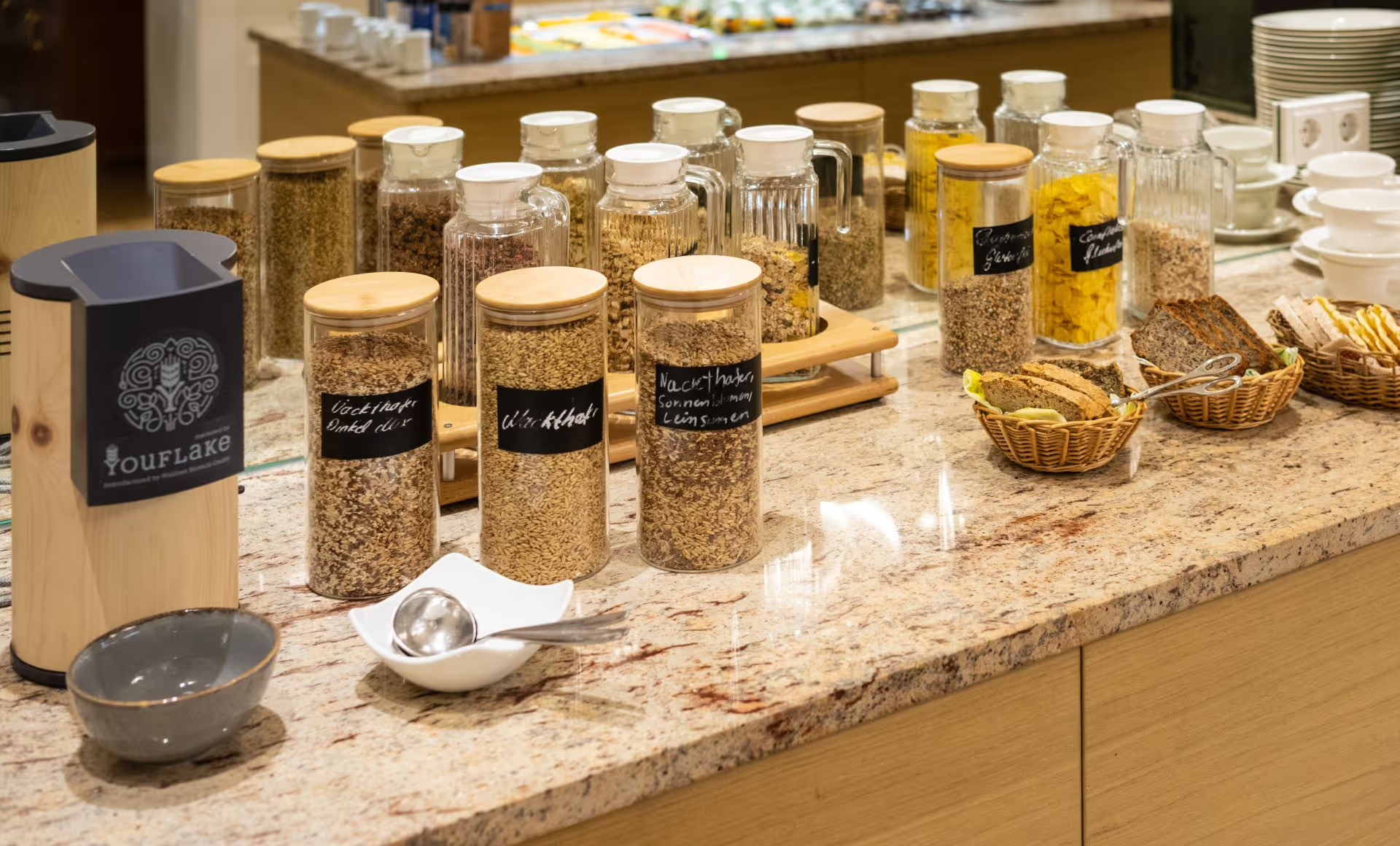
Our energising breakfast buffet includes healthy homemade Bircher muesli. Heart-healthy oats, aromatic apples, juicy oranges and fresh seasonal fruit are just as much a part of this as other valuable ingredients from certified organic farming, such as yoghurt and flaxseeds. Out of consideration for people with allergies, we do not add nuts to the muesli. You can also add freshly prepared grains, almonds, nuts, sesame seeds, sunflower seeds, and dried fruits such as dates, prunes, and figs to create your own favourite breakfast.
A hearty grain dish can be made by cooking spelt or oats with fresh sprouts, herbs, vegetables (such as tomatoes and carrots), a little cream and vegetable broth. You can add a teaspoon of valuable flaxseed oil, an ideal source of omega-3 fatty acids, at any time.
In addition to valuable calcium, vitamins and minerals, muesli provides a wealth of healthy fibre. The importance of fibre has been the subject of extensive scientific research, and its positive influence on various lifestyle diseases such as constipation, colorectal cancer, diabetes and heart disease has been proven in numerous studies.
Fibre affects both fat and carbohydrate metabolism. The German Nutrition Society recommends an intake of at least 30 g of fibre per day to prevent these diseases, but the average German citizen's intake is significantly lower. Fibres are food components that pass through the small intestine virtually undigested and are therefore not directly available as an energy source. They have a high water-binding capacity and can absorb organic substances such as bile acids, thereby promoting digestion and preventing constipation.
Grains and fruit are some of the most important sources of fibre and can be found in freshly prepared, versatile muesli.
.avif)
.avif)

More articles from our blog

Health tips
You don't have to live with fatigue, lethargy and low energy levels. Find out how your energy levels are influenced and how you can support your metabolism.